
Key Takeaways
- Form 4506-C for tax data verification comes with strict formatting rules, wet signatures, and high rejection rates that slow the lending process.
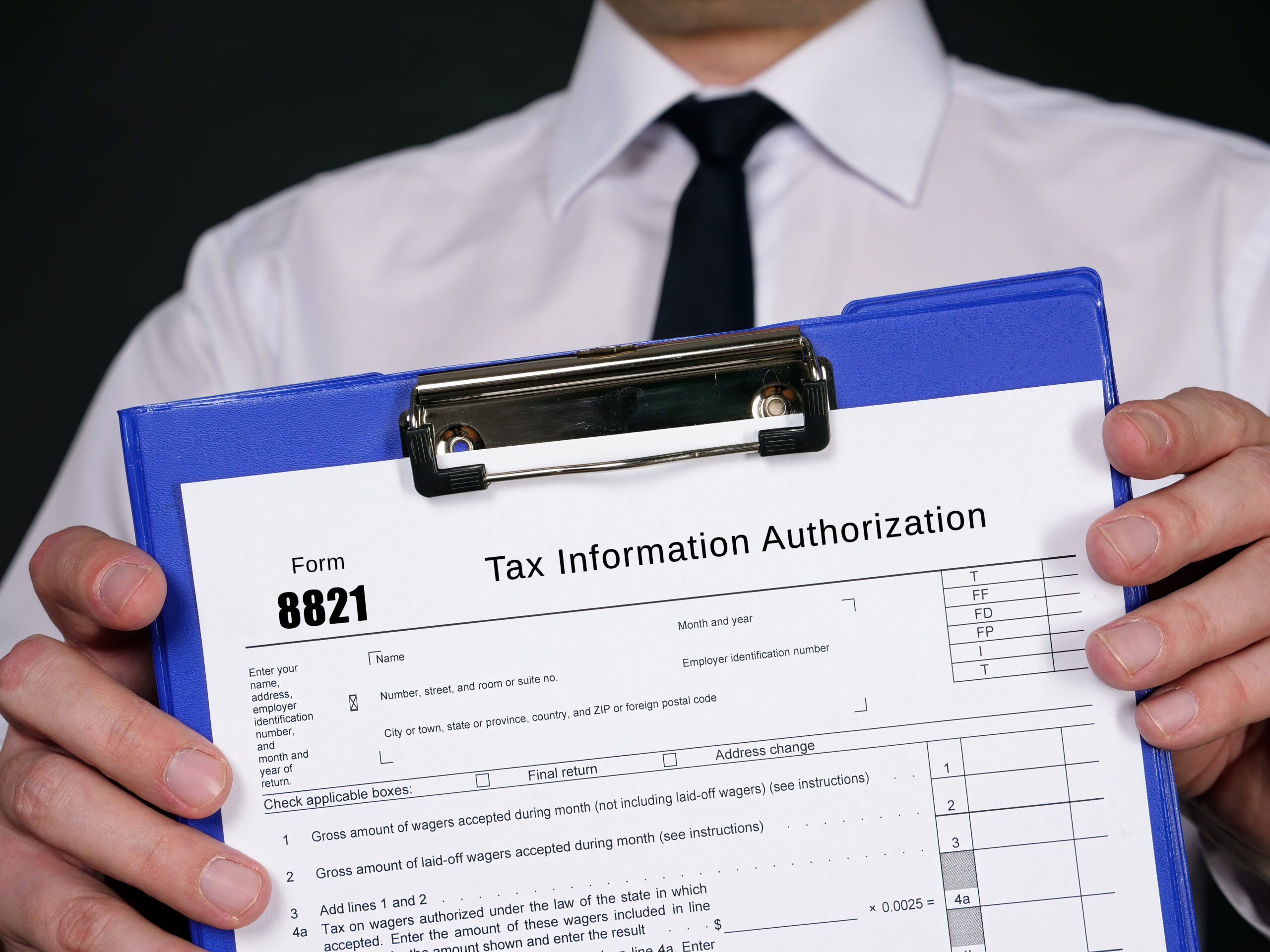
- Form 8821 offers broader, ongoing IRS data access by authorizing continuous access to filings and account data for up to three years.
- Form 8821 accepts e-signatures, reduces rejections for small mistakes, and eliminates repetitive paperwork when lenders need updated tax data.
- Modern lending favors Form 8821 because it improves efficiency, supports real-time monitoring, and helps lenders detect borrower risk earlier.
Lenders need to verify that tax data provided by borrowers is accurate, and this is most effectively achieved by retrieving a borrower’s tax transcript directly from the IRS.
Despite being a seemingly simple function, any friction at this stage in the loan process can greatly affect the cost and timeliness of each deal.
Despite being a seemingly simple function, any friction at this stage in the loan process can greatly affect the cost and timeliness of each deal.
IRS Form 4506-C
Using IRS Form 4506‑C to pull tax return transcripts is a standardized way to independently verify a borrower’s stated income and make sure the tax returns behind a file exist and match what was provided.
Tax transcripts obtained directly from the IRS help lenders confirm filing status, reported gross receipts, and trends in income over time, which is critical for preventing fraud, catching overstated numbers, and satisfying investor or regulatory requirements in mortgage and small business credit.
But Form 4506‑C comes with its fair share of pitfalls.
This form has extremely strict formatting rules and a high rejection rate. Not only can this delay the process, but depending on the transcript vendor, the cycle of rejection and resubmission can be pricey.
Additionally, chasing wet signatures from every guarantor or owner can bog deals down for days.
Even when everyone signs, transcripts still get rejected for tiny errors— wrong entity name, missing checkbox, or incorrect tax years— forcing lenders to go back to the borrower and start the process over.
It can take up to two weeks to wait for approval, so having to restart the submission process can set the loan process back by several weeks.
Some lenders try to sidestep these issues by asking borrowers to retrieve their own transcripts directly from the IRS and upload them, but that often creates new problems. Borrowers struggle with IRS accounts and identity verification, upload incomplete or outdated files, or simply stall because the process feels confusing and invasive, all of which adds friction, delays, and fallout risk to the funding pipeline.
Additionally, lenders are losing the value in IRS-verified transcripts if borrowers are given the opportunity to potentially tamper with the retrieved data.
Tax transcripts obtained directly from the IRS help lenders confirm filing status, reported gross receipts, and trends in income over time, which is critical for preventing fraud, catching overstated numbers, and satisfying investor or regulatory requirements in mortgage and small business credit.
But Form 4506‑C comes with its fair share of pitfalls.
This form has extremely strict formatting rules and a high rejection rate. Not only can this delay the process, but depending on the transcript vendor, the cycle of rejection and resubmission can be pricey.
Additionally, chasing wet signatures from every guarantor or owner can bog deals down for days.
Even when everyone signs, transcripts still get rejected for tiny errors— wrong entity name, missing checkbox, or incorrect tax years— forcing lenders to go back to the borrower and start the process over.
It can take up to two weeks to wait for approval, so having to restart the submission process can set the loan process back by several weeks.
Some lenders try to sidestep these issues by asking borrowers to retrieve their own transcripts directly from the IRS and upload them, but that often creates new problems. Borrowers struggle with IRS accounts and identity verification, upload incomplete or outdated files, or simply stall because the process feels confusing and invasive, all of which adds friction, delays, and fallout risk to the funding pipeline.
Additionally, lenders are losing the value in IRS-verified transcripts if borrowers are given the opportunity to potentially tamper with the retrieved data.
How is IRS Form 8821 Different?
Form 8821 changes the dynamic because it authorizes tax information access. This is opposed to accessing a one‑time transcript pull, and it’s built to support ongoing data retrieval the IRS instead of a single transcript order.
Form 8821 can often be granted through a simple e-signature and that permission grants access to IRS transcripts for up to 3 years, rather than granting a one-time pull.
That means a lender or platform can keep getting updated IRS data— returns, account history, payment plans, delinquency signals— without repeatedly chasing fresh signatures every time they need another year or another transcript.
It also reduces the rejection risk that comes with Form 4506‑C’s strict formatting and signature rules. Because Form 8821 authorizations are more flexible and guarantor signatures can be captured electronically, there are fewer opportunities for the process to break over minor oversights and variances.
Form 8821 can often be granted through a simple e-signature and that permission grants access to IRS transcripts for up to 3 years, rather than granting a one-time pull.
That means a lender or platform can keep getting updated IRS data— returns, account history, payment plans, delinquency signals— without repeatedly chasing fresh signatures every time they need another year or another transcript.
It also reduces the rejection risk that comes with Form 4506‑C’s strict formatting and signature rules. Because Form 8821 authorizations are more flexible and guarantor signatures can be captured electronically, there are fewer opportunities for the process to break over minor oversights and variances.
Key Components of Form 8821
- Basic taxpayer details (name, address, SSN/EIN) identifying who is granting access.
- The person or company being authorized to receive IRS tax information (the appointee/designee).
- What tax information can be shared (tax types, forms, and years or periods covered).
- The taxpayer’s signature and date, plus options to keep or revoke prior authorizations.
Lending is Modernizing. Are You?
Form 4506-C | Form 8821 | |
|---|---|---|
Core Purpose | Authorize IVES participants to request tax return transcripts from the IRS for specific time periods | Authorize a delegated person or business to view IRS account, return, and transcript information for up to 3 years forward and 10 years back |
Channel | IVES (Income Verification Express Service) | Transcript delivery systems; often APIs and consumer-permissioned flows |
Signatures | Wet signature most commonly required; e-signatures allowed in specific contexts | E-signatures accepted, with wet signature optional |
Speed | Up to 1-2 weeks | Up to 5 business days, as little as 1 business day |
Form 4506-C vs. Form 8821
Tax data verification is one of the most integral parts of lending, and your process for transcript retrieval directly impacts how effectively you’re protecting your institution from fraud and borrower risk.
Further, modernizing this bottleneck also results in increased efficiency, so you can effectively scale your lending process.
Form 8821, combined with e‑signature and ongoing monitoring, turns that IRS data into a living feed you can plug directly into underwriting, servicing, and portfolio risk workflows.
Instead of chasing wet signatures, resubmitting rejected forms, and spending time managing borrowers attempts at retrieving their own transcripts, your team can send a one-time virtual e-signature request on Form 8821, then see real‑time changes in filings, balances, and payment behavior throughout the life of the borrower’s credit.
Further, modernizing this bottleneck also results in increased efficiency, so you can effectively scale your lending process.
Form 8821, combined with e‑signature and ongoing monitoring, turns that IRS data into a living feed you can plug directly into underwriting, servicing, and portfolio risk workflows.
Instead of chasing wet signatures, resubmitting rejected forms, and spending time managing borrowers attempts at retrieving their own transcripts, your team can send a one-time virtual e-signature request on Form 8821, then see real‑time changes in filings, balances, and payment behavior throughout the life of the borrower’s credit.
Interested in How TOD Can Help You Transform Your Lending Practice
Contact our partnerships team to learn more about TOD’s use of IRS Form 8821, TOD’s e-signature feature, and how this workflow facilitates ongoing monitoring to help you mitigate lending risk.